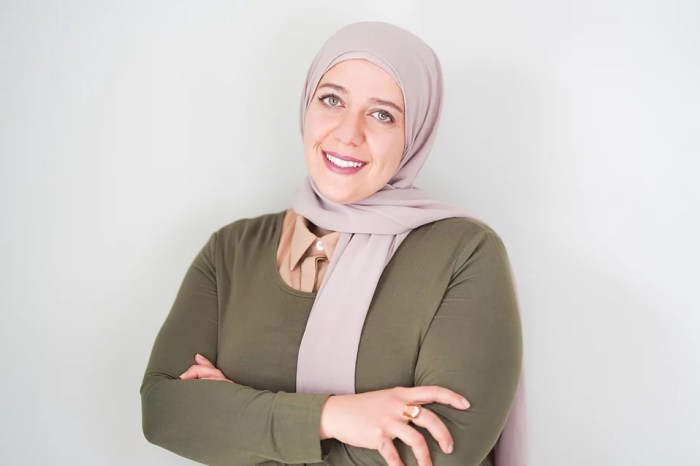
It’s time for our second Feature Interview of April, and today’s guest is a literary superstar. Not only does Maya have a background in literacy and education, but she’s also a current project manager in the world of publishing, an editor, a children’s book writer publishing across genres in kidlit, and married to a picture book author and illustrator, Matt Myers! But, before we get started, in case this is your first time visiting the blog (welcome), here’s a brief introduction to what feature interviews are all about and how they can benefit you!
WHAT ARE FEATURE INTERVIEWS AND WHY ARE THEY SO GREAT?
In a nutshell, here’s what a “feature interview” is. Every month, I sit down with literary professionals –authors, illustrators, editors, and agents– at all stages of their careers- from newly debuting to well-established, seasoned best sellers- and we discuss all things kidlit publishing. (Many of my guests are also former or current educators and librarians!)
These interviews are a great resource for kidlit writers and illustrators no matter where they are in their journey. Not only do they offer current information on market trends, but they also give readers an up close & personal look at the world of publishing from a diverse collection of creators and perspectives.
Here’s a list of just a few of the helpful things we discuss:
- Where to find both FREE and PAID for writing memberships, craft workshops, contests, and other resources
- How to query agents and editors and what they’re looking for
- Where to find kidlit community and support from other writers or illustrators
- Diversity, empathy, and kindness in kidlit and why it matters
- How to improve your skills and set goals
- Writing across genres
- How to deal with setbacks/disappointments and WAITING
- Helpful tips and suggestions for aspiring authors and illustrators
- Pros and cons of small publishers, hybrid (or indie) publishing, and being agented vs. unagented
- What to do after you sign with your first agent – and/or make your first book deal
- How to promote your books as a debuting author or illustrator
- Behind the scenes of hosting author events- library/school visits
- How to get your books into bookstores & schools
- And of course- during each feature interview segment- we share new publishing deals & host giveaway prizes for our readers!!! ** Giveaway PRIZES and instructions on HOW to enter are listed at the bottom of each interview**
Not that we’ve shared a little about what’s in store… it’s time to jump into our interview!
BEGINNINGS
Maya, I’m so excited to have you with us today! I loved your book NOT LITTLE and was happy to see all the various ways you work in the world of kidlit. But before I get too deep into the details… I like starting my interviews at the very beginning.

I know you were “once upon a time” a kindergarten teacher. And now you’re a children’s book author – writing across genres! – (among other things).

So, for the author side of things, when and how did you get your start in publishing? Was it something you always knew you wanted to do, or was it something you discovered later in life? And did your previous work as an educator have anything to do with your desire to write kids’ books?

In my first career as an elementary school teacher, I designed my teaching units around books. Books were always a big part of my own life and my kids’ lives, too. When I started freelance editing, I reached out to children’s publishers because I had a lot of experience reading children’s books. But I didn’t really think I’d ever write one—until I did! I started writing picture books around the time my youngest daughter (now 16) started school. She said the funniest things and one day, I was sitting in the next room listening to her talk to my husband, and I decided to take a shot at preserving some of her childhood by writing about it.

What were the beginning stages of your publishing journey like? Can you tell us about the early stages- querying- rejections and how you wound up with your agent?

I was lucky enough to know Neal Porter (my first editor) through my husband, who has worked with him for years. Neal read my very first story and encouraged me to keep writing, and graciously read a number of manuscripts for me over several years. The first time I showed him Not Little (my first published picture book), he liked it but said it wasn’t quite right for him. I felt good about it anyway, so I submitted it to a couple of agents, but with no luck. About six months later, I shared a completely different type of book with Neal, and while he liked it, he said he just wanted a good, solid story from me. I asked if he remembered the story about the little girl who stands up against bullying, which I had recently revisited and tweaked the ending of. I still really loved it and told Neal I didn’t think I could do much better than that. He asked to see it again, and this time, he said it was perfect and he wanted to publish it! I was shocked and thrilled. My husband’s agent’s assistant was just moving into representing clients of her own, and she accepted me as one of them.
WORK-FOR-HIRE + WRITING ACROSS GENRES
Not only are you traditionally published and agented by the lovely Hannah Mann at Writers House, but you also do work-for-hire books and work as an editor and project manager. This is the dream! Or at least- I think it’s the dream.
As someone who would love to dip her toe into work-for-hire work herself, can you tell us more about what’s involved in this process? Is it similar to the querying process? And does your agent have anything to do with your work-for-hire projects, or is this done separately?

I initially shared my resume with National Geographic Kids as a freelance copyeditor and proofreader, and I didn’t hear from them for a year. When they did reach out, it was to ask if I was interested in writing a leveled reader. I had never done anything like that before (and this was before I’d sold my first picture book), but I was excited to try! That project led to a few others like it, as well as some bigger books, and also to some project management work for NGK and then with other companies. My agent connected me with another publisher that does some projects this way, but these projects are generally not agented. I’m contacted by the publisher or organization; they offer a job with a flat fee and a schedule, and I can accept it or not.

I’ve heard that the work-for-hire projects can be more selective, and oftentimes, they’re written in-house. Can you speak to this? Would you say it’s more difficult than getting your work published traditionally with an agent and publisher?

I guess this depends on the type of project. For the work-for-hire projects I’ve done so far, I’ve just been offered the jobs, so it’s been WAY easier than trying to sell a manuscript. To me, these WFH projects feel closer to editorial work than to creative work; I’m making a product to fit a prescribed mold rather than coming up with a concept and an original way to present it. It’s a collaborative process with a whole team. I’m proud of the end result, of course, but I feel a different sense of ownership for the books I’ve generated from my imagination.

Circling back to publishing across genres in kidlit… I wonder, do you have a favorite to write or read? PB? MG? Chapter books? Personally, I write mainly picture book manuscripts- and I love reading picture books- but I also really love reading middle-grade. What about you?

I started out writing picture books with no intention of expanding to other audiences. My first chapter book started as a picture book; it was my agent’s idea to make it longer and for older kids, and I wasn’t sure it would work, but it turned out I really enjoyed writing with more room for dialogue and description.

I love that my work as an editor lets me read as a full-time job! This gives me a chance to read a lot more MG and YA than I would otherwise have time for, and I really enjoy both. I always love picture books, too, and I miss having little people to read to on a regular basis!

What tips can you give other writers or illustrators who are trying to break into the industry?

I think no matter what age you’re writing for; a unique voice and perspective will always serve you well. And if your main character can surprise the reader in some way—give them something that’s a little different from what they were expecting because of the way the character has grown or changed in the course of the story—that helps create a more satisfying ending.
“I think no matter what age you’re writing for; a unique voice and perspective will always serve you well. And if your main character can surprise the reader in some way—give them something that’s a little different from what they were expecting because of the way the character has grown or changed in the course of the story—that helps create a more satisfying ending. “
OTHER ROLES IN PUBLISHING: SHARED PASSIONS & INSPIRATION
In addition to writing across kidlit genres, you’re also an editor and work as a project manager. Can you tell us more about those positions? What’s involved in each?  And do they have a positive crossover- if any- to your writing career- or vice-versa?

I do freelance developmental editing, copyediting, and proofreading for various publishers and authors. I enjoy working with text at all these different levels—big picture to tiniest detail. Project management tends to be more organizational—making sure all the moving pieces come together at the right time and in the right ways—and I’m often also the text editor for these projects (for example, a set of leveled readers) as well, so the job brings together lots of skills I’ve developed over the years as a freelancer.

As a writer, I definitely get inspired by editing other people’s books, and I hope I’m an easy author to work with because I have some experience with the process of the book actually getting made.

I think it’s beyond words cool that your husband also works in the kidlit arena with you. How fun to have that shared passion! And as I was writing these questions, I kept wondering how it all happened. So, here’s my question.
Which came first- the chicken or the egg? The chicken being your husband Matt, the egg being your beginning to publication. Were your two paths linked? Did you begin writing together? Did one of you start first? Were you already married when you started writing, or did the writing dream begin afterward?

Who says I’m not the chicken?? Just kidding—Matt has been at this much longer than I have, since years before we got married. He found my feedback on his own writing helpful and encouraged me to get into editing. Then, when I started writing, he encouraged me to share my work with Neal, who encouraged me further. My first story was inspired by watching Matt and my youngest bond over imaginary play.

What is it like being married to an author/illustrator? Do you ever brainstorm ideas together or get to work on projects together?

We are always each other’s first editor—an in-house (literally) critique group. We talk about story ideas, some of which come to fruition for one of us and some that fade away. If authors got to choose their own illustrators, I would choose him again and again; however, I’ve been so incredibly lucky with the illustrators for my books that I’m glad I didn’t have that option! We have not yet worked on a project together, but we hope to someday.

A double book launch for me and Matt at Park Road Books in Charlotte, North Carolina
I was also excited to see that you live in Charlotte, North Carolina (I have family there). I actually grew up in a small town outside of Asheville- and only moved to Tennessee a few years ago after getting married. (I lived there from ages 12-28). I’ve been penning tales since I was 4, so when my family moved me to NC at age 12, it definitely stirred my creative inspiration for writing. From regular weekly drives through the Blue Ridge Parkway, trips to the orchards, swimming in creeks on the side of the road, and finding hidden waterfalls along the trails, there was so much to spark the imagination!

Do you find your inspiration in similar ways, being out in nature? If not, what kinds of things inspire you to write? And what do you enjoy writing about most?

I grew up in rural Maine, and I’ve always been inspired by nature; my next picture book (Good Morning, Morning, coming in 2026 from Neal Porter Books, illustrated by Jennifer Mann) is about a child greeting the day by connecting with all the different things in their natural world. I have also always loved young kids and the funny things they say and think and do. I like watching them put the pieces of the world together, figuring out how things fit and where they fit in all of it. It feels really satisfying to represent a kid’s world view in a story.

Speaking of writing and inspiration… one thing I’ve found to be invaluable on this journey is being a part of the writing community. It helps keep you motivated to continue going even when things get tough. Do you have any recommendations or favorite places to go to find a writing community?

A lot of libraries host writing groups, and your local SCBWI chapter can also be a great resource. Attending book launches at your local bookstore is an excellent way to support both authors and bookstores, and to meet other authors and help build your own local writing community.
“A lot of libraries host writing groups, and your local SCBWI chapter can also be a great resource. Attending book launches at your local bookstore is an excellent way to support both authors and bookstores, and to meet other authors and help build your own local writing community.“
THE JOURNEY: CHALLENGES & WORDS OF WISDOM
We love cheerleading and hearing all the good things that happen for our fellow writers. But sometimes, hearing only the positives (aka half the story…) can be misleading and, at times- disheartening- because people might feel like they’re the only ones struggling. So, what are some challenges you’ve personally had to face on your publishing journey, and how have you been able to combat them?

I think the hardest things for me have been waiting and rejection. Both have certainly gotten easier over time as I’ve come to know what to expect. It was three years between when I sold my first picture book manuscript and when the book came out into the world. It’s usually many months between the time a manuscript goes out on submission and the time an editor makes an offer or (more often) a pass. It’s important to me to stay busy with other things, or I’d spend all my time obsessing over whatever book is out on submission—it’s better if I don’t think about it at all! Especially since more often than not, chances are that book will never sell. Even though I have an awesome agent and my published books have been very well received, it is still very hard to sell a new book. I know my books are not for everybody, and I do not take rejections personally. I keep a spreadsheet with notes about what worked and didn’t work for various editors, and I review those notes as I’m developing new ideas. And I know that if I never sell another book again, I’ll still be incredibly proud of the ones that have been published.

In your professional opinion, what makes publishing so hard? And what words of wisdom do you have for those just starting out?

Like any art, writing is inherently a subjective business, so some people will like your work, and some will not. Rejection is never easy, and there are very few rejection-free paths to publishing. It can be hard to believe in something you created when other people don’t seem to get it—but that doesn’t mean no one will ever get it.

One of the best things we can do to keep our work relevant to the current market is to keep reading new books that are being published. See what’s out there, what you like and don’t like. Then you can see both where you can fit in with the crowd and what holes you can fill with your unique voice.

While we’re talking about “words of wisdom,” do you have any “do’s and/or don’ts” to share with our readers?

Do make a storyboard for your picture book. You don’t have to be able to draw. Just thinking about where the words will go on the page will help you figure out page turns and will help you lower your word count.

Do leave room for the illustrator to do their job. In a well-balanced picture book, neither the text nor the illustrations will be as effective separately as they are together. The words don’t need to describe what things look like, and the more you can stay open to different ways your book might ultimately look in the end, the happier you are likely to be with the illustrations.

Do put every project away for long enough that you can forget how it goes. Then, try to come back to it and read it with fresh eyes. Pretend someone else wrote it. What parts work well? What could be done better?

Do share your work with others and listen to what they have to say. That’s not the same thing as doing everything they say, not at all. But hear it, decide whether it resonates with you, and either act on it or release it.

“Like any art, writing is inherently a subjective business, so some people will like your work, and some will not. Rejection is never easy, and there are very few rejection-free paths to publishing. It can be hard to believe in something you created when other people don’t seem to get it—but that doesn’t mean no one will ever get it.“
“One of the best things we can do to keep our work relevant to the current market is to keep reading new books that are being published. See what’s out there, what you like and don’t like. Then you can see both where you can fit in with the crowd and what holes you can fill with your unique voice.“
BOOKS, BOOKS, BOOKS!
Okay, we’ve made it through all the nitty-gritty publishing questions, and now it’s time to celebrate- with books! We’ve danced around the topic of your writing across genres. Now, let’s hear about your stories! Tell us about your books!

Each story tells about a part of us. What do each of your books mean to you personally? Why’d you write them? And what do you hope they will do for your readers? What was each journey like for your story? Which one was published first- your debut book deal? What were the emotions of the process? And about how long did each book take- from the beginning (writing) to book deal and publication?

For some of our readers who are new to publishing, it might come as a surprise that not all authors in the kidlit arena are illustrators- in fact, most aren’t. Can you share a little bit about the illustration process for your books and how much or little you were involved in that?

My debut picture book was Not Little, illustrated by Hyewon Yum (Neal Porter Books / Holiday House, 2021). My inspiration for this book came from a number of tiny but fierce kids I’ve known over the years, who seemed to make up for their “little” stature with outsized spunk and determination. One of them is my youngest, who was very small as a young child and a precocious reader. She was perpetually indignant that the school librarian wouldn’t let her check out big chapter books and was often looked at skeptically when she would order (and polish off) a whole pizza in a restaurant.

I wrote this story in 2017 when there was a new level of vitriol and unkindness flying around in the world, and I wanted to remind my own kids and others that anyone can fight back against cruelty without being cruel. I sold the manuscript in 2018, and the book was published in 2021.

I made these Dot dolls as a pandemic project—one for Neal, one for Hyewon, one for me.
I was originally hoping that Neal, my editor, would select Matt as the illustrator for my first book; after all, they’d been working together for years, so why wouldn’t he pair us up? So when Neal told me that he’d decided to go with someone else, I was a little bit disappointed. But I loved Hyewon’s work, and when I first saw the dummy (sketches) for Not Little, I was so excited to “meet” the main character and her family that I burst into happy tears.

An illustrator’s note in the manuscript had said she came from a big family, but the multigenerational blended family Hyewon imagined was greater than I could have hoped for!

I knew I wanted to get to know that family better, so that’s where I started the follow-up book Not Perfect, which I wrote and sold in 2021 and which is out now, in 2024 (again, a three-year turnaround). Not Perfect is for all of us who strive for perfection. It’s a reminder that it’s the striving itself—the trying, the making mistakes, and the bouncing back and trying again—that makes us strong.


Meeting Hyewon Yum at the Society of Illustrators Original Art Show, 2019
As I mentioned earlier, my first chapter book started out as a picture book called Little Red Writing Hood. My agent loved it and got it ready to go out on submission. Then, at the last minute, she said she thought the story was better suited to older readers and suggested that I rewrite it as a chapter book. It took me about a year to get on board with this idea, but once I started, I really loved writing for older kids. And when we sold that manuscript to Krissy Mohn at Capstone (summer of 2022), she said she wanted a series of four books—and all the manuscripts were due within six months! So I had to make room in my schedule for a lot more writing than I usually do, but it was a lot of fun, and I’m so thrilled to have all four books coming out this year (the first two are out now; the other two coming in August).

Eleanor Howell did an incredible job with the illustrations! Each of the books has a curriculum-based focus (writing, scientific method, research, and graphing), nestled into some of the real social and emotional struggles that elementary-aged kids face. I liked getting back to teacher mode for these curriculum-based stories, and I really hope the books will be helpful to teachers—and fun for kids to read!

For all my books so far, and for almost all of the dozens of books I’ve seen my husband illustrate, the writing process and the illustration process are pretty separate. The author has the freedom to create the story as they envision it, and then the editor has the fun job of playing matchmaker: choosing an illustrator they think will bring this story to life in an effective, engaging way, then giving them the freedom to do just that. In return for your trust, you get the gift of having an artist enhance your story by turning your ideas into a visual experience.

What has/have been your favorite part/parts of being a published author? If you have more than one favorite – feel free to share! I know it’s hard for me to pick a single favorite, so I totally understand if you can’t choose just one.

I love connecting with kids and making them feel empowered to do things—whether it’s recovering from frustration or, standing up to a bully or writing a story of their own. It’s also super fun to work in the same field as my husband, and getting to make friends within the kid lit community together.


These pictures are awesome. Thanks so much for sharing them with us and for joining us today, Maya.

Thanks so much for having me!

But we’re not quite finished yet. Now it’s time for our GIVEAWAY.

GIVEAWAY PRIZE: Maya is offering a signed copy of Not Little or Not Perfect.
HOW TO ENTER THE GIVEAWAY
- Subscribe to the blog
- Like this blog post
- Comment below, letting me know you’ve done 1 & 2. (Please note: If the guest is offering more than one prize, please specify which prize you’d like in your comment.)
Deadline to enter: April 30th, 2024, 11:59 PM CST
And that’s it!
FAQ:
What if I was already subscribed to the blog? Does that mean I won’t qualify for the Prize Giveaway? Not at all! If you subscribed before this month, all you’ll need to do is LIKE this Feature Interview and leave your COMMENT below this post within the deadline (the current month/year entry was posted).
Did you enjoy this interview? Thank the author & host by purchasing a copy of one of their books or by requesting it be purchased at your local library! Using the sponsored links below also supports this blog.
PURCHASE Not Perfect

PURCHASE Not Little

PURCHASE Rosie Woods in Jack and the Bean Shock

PURCHASE Rosie Woods in Little Red Writing Hood

PURCHASE Rosie Woods Rosielocks and the Three Bears (available for pre-order now)

PURCHASE Rosie Woods The Three Billy GOATs Graph (available for pre-order now)

PURCHASE National Geographic Kids Little Kids First Big Book of Baby Animals

PURCHASE National Geographic Kids Llamas

PURCHASE National Geographic Kids Puffins

PURCHASE National Geographic Kids Hippos

PURCHASE ADHD and Me

Already own a copy of one of these? Consider leaving a brief review on Amazon, Goodreads, or Barnes & Noble.

Maya Myers writes books for kids. Her debut picture book, NOT LITTLE, was named a 2022 ALSC Notable Children’s Book. She’s also a freelance book editor and publishing project manager, working with both authors and publishers on all sorts of books, from phonics readers to memoir and everything in between. She’s a former kindergarten teacher, K-5 literacy teacher, and piccolo player. These days, when she’s not wrangling words, she’s probably cooking, digging in the garden, playing a board game with lots of pieces, or (surprise!) reading.
Maya grew up playing in the woods on the coast of Maine in a little town that is still almost thirty miles from a stoplight. She attended Duke University and has called North Carolina home ever since. She lives in Charlotte with her husband, author/illustrator Matt Myers, three kids, six chickens, and a twenty-three-pound cat.
ohmayaword.com (author site) mayamyersbooks.com (editorial site)