DECEMBER 4TH, 2024 FEATURE INTERVIEW WITH CHILDREN’S BOOK AUTHOR EMMA PEARL, CONDUCTED BY CHILDREN’S BOOK WRITER, BLOGGER, AND FORMER LIBRARIAN CHELSEA DICICCO

In today’s feature interview, I’m talking with children’s author Emma Pearl about exciting ways of breaking into the kidlit market. Emma shares how she got her first book deal through a Twitter/X pitch event and shares tips for other creators on ways/places to go to participate and put themselves out there!

But before we jump in… here are a few things to know about feature interviews.

THE SCOOP: WHAT ARE FEATURE INTERVIEWS & WHO ARE THEY FOR?

Feature Interviews are a free resource for writers and illustrators at every stage of the publishing journey.

Every month, I collaborate with industry professionals—authors, illustrators, editors, and agents— many of whom were or currently are also educators and librarians, to discuss all things publishing.

What can these interviews offer YOU?

These interviews give readers an up-close and personal look at the world of publishing from an array of different perspectives on every side of the desk and offer insight into tips, resources, and advice on how to:

  • stay current with market trends
  • hook an agent or editor
  • find writing community & other resources
  • discover workshops, contests, and other events
  • figure out which path of publication is right for you
  • know if your agent is a good match

And more!

AND… if that’s not enough, every guest offers at least one giveaway prize—sometimes more. This means you have multiple opportunities to win prizes every month! *If you’re interested in entering the giveaway, scroll to the bottom of the interview for instructions.*

Not that we’ve shared a little about what’s in store… it’s time to jump into our interview!

INTRODUCTIONS AND EARLY BEGINNINGS

Emma, it’s such a treat to have you joining us today! I share your sentiment that all journeys to publication are unique and interesting, and yours is certainly an inspirational one. I can’t wait to dive into the story of your publication. I’d love to start our interview today back at the beginning.

What was your beginning inspiration for joining the world of kidlit?


I’ve always loved reading and writing and have had a lifelong affinity with children’s literature. Stories can be so magical and transformative for young people – a place to escape, to explore yourself and your place in the world, to discover endless possibilities. I’m not sure there was a ‘beginning’; it’s just always been a passion of mine.

Have you always known that you wanted to be a writer, or is it something that you discovered later?

I’ve always known – as soon as I could hold a pencil, I was writing stories, stapling pieces of paper together to make books!

-Same!-

You had a pretty famous family member who also wrote for children. I’ll let you share who that mystery person is! What was that like growing up? And did their writing legacy influence you and your desire to write for kids?

Roald Dahl was my great-uncle, and I think it’s probably not a stretch to say that his legacy has had a profound influence on many people across the globe, including many children’s authors. He was a huge presence in my early childhood – a kind of magnetic, charismatic, mystical, and sometimes slightly intimidating locus of energy. Being at his house was always hugely exciting and a little scary – whether he was taking us on walks up to the woods and telling stories about the Witching Tree that grew there, showing us his giant greenhouse full of exotic and mysterious plants, letting us play in his Danny the Champion of the World caravan, or threatening to chuck all the children in the garbage! Plenty of inspiration for a young imagination.

I have to ask… do you have a favorite of one of your uncle’s books? If so, which and and why?

The Twits is dedicated to me, so that’s naturally a special book for me. But I think my favorite is Matilda – she’s just such an iconic female character. I also feel a personal connection to her, as I believe (although I can’t confirm it 100%) that Miss Trunchbull was at least partly based on one of my teachers!

-Oh my gosh... goosebumps! And yes, Matilda is absolutely brilliant. Also one of my favorites.-

(Learn more on Emma’s website!)

“Roald Dahl was my great-uncle… He was a huge presence in my early childhood – a kind of magnetic, charismatic, mystical, and sometimes slightly intimidating locus of energy.” – Emma Pearl @emmspearl

MRS Book Fair April 1979

Prior to publication, and maybe even still, what kind of work were/are you doing outside of writing, and did that somehow play a role in your journey to entering kidlit publishing?

I’ve worked in all kinds of jobs, from contemporary art to travel to professional regulation. I also worked in kidlit publishing in London for a couple of years in the late '90s, which I loved. I’m not sure these days whether work (i.e. earning a living) and writing kidlit are very closely aligned, sadly.

Speaking of which… it’s time to jump into the when and how!
When and how did your publishing journey begin?


Although I’d been writing stories all my life, my first ‘real’ step into the publishing world was in 2020 when I was selected as a mentee for the WriteMentor mentorship program.

Let’s talk about those first steps as a new writer breaking into the industry. When you decided you wanted to pursue publication professionally, what were your first steps? Did you query agents and/or submit directly to editors?

I didn’t do either to start with – I was far too lacking in confidence! Before I applied for that mentorship, I had spent 4 years learning as much as I could from free resources online and practicing the craft. I also read as much as I possibly could.

Were there any writing groups or organizations that were especially instrumental in helping you in your beginning stages of writing? If so, what were they, and how did they help you?

WriteMentor was an amazing resource. I was a mentee in 2020 with a middle-grade novel, and in 2021 and 22, after I got my book deal, I was a picture book mentor for the same program. I learned as much from being a mentor as I did being a mentee, but the most valuable takeaways from all 3 years were the connections and feeling of community. I think WriteMentor’s tagline is ‘writing can be lonely, but it doesn’t need to be,’ which is so true and perfectly encapsulates what they do as an organization. If you haven’t discovered them yet, I recommend checking them out.

Can you tell us about some of the events and contests that you’ve participated in, which ones you would most recommend to other authors, and why?


There was a time when I would enter every free-to-enter contest and pitch event. It can be good for honing your craft, and obviously, it’s lovely if you get some recognition, but I think, in hindsight, it took a much bigger toll on my creativity and my mental well-being than I realized at the time. It can be very emotionally draining to be in that constant cycle of writing to a brief, submission, hope/excitement, and disappointment/rejection. Pitch events have a similar rollercoaster effect on the emotions. Although let’s face it – that’s what being a writer is all about, so it’s also very good practice!

Pace yourself and don't feel pressured to participate in anything if you haven't the time or headspace to do it well or to handle disappointment.

One of my favorite contests is Vivian Kirkfield’s 50 Precious Words, which not only always has a ton of amazing entries and prizes but also includes a literacy initiative that gets books from an independent bookstore into schools. Everyone wins!

As far as pitch events go, I’m honestly not sure which ones are still going, but one I used to love was Mood Pitch, where you had to post a mood board with your pitch - I’m an absolute sucker for those visual aesthetics!

Speaking of contests… let’s talk book deals and magical moments in publishing!

[Words of wisdom: Writing resource recommendations] “WriteMentor was an amazing resource. I think WriteMentor’s tagline is ‘writing can be lonely, but it doesn’t need to be,’ which is so true and perfectly encapsulates what they do as an organization.” -Emma Pearl

[Words of wisdom: Advice on writing contests + events] “Pace yourself and don’t feel pressured to participate in anything if you haven’t the time or headspace to do it well or to handle disappointment.” – Emma Pearl

[Writing contests + events] “Can be good for honing your craft, and obviously, it’s lovely if you get some recognition, but I think, in hindsight, it took a much bigger toll on my creativity and my mental well-being than I realized at the time. It can be very emotionally draining to be in that constant cycle of writing to a brief, submission, hope/excitement, and disappointment/rejection.” @emmspearl

“WriteMentor was an amazing resource. I was a mentee in 2020 with a middle-grade novel, and in 2021 and 22, after I got my book deal, I was a picture book mentor for the same program. I learned as much from being a mentor as I did being a mentee, but the most valuable takeaways from all 3 years were the connections and feeling of community.” @emmspearl

DREAM COME TRUE: MAGICAL MOMENTS IN PUBLISHING

In your application, you shared a unique experience about how you landed your first book deal. It’s one of those experiences that is a one-off and so exciting to hear about. Would you mind telling our readers about how you landed your first “big break?” I’m sure they’d love to hear about it!

Okay, I got my book deal on Twitter. There, I said it! I know it’s all gone a bit awry since the bird has flown from there, but back in the day, it was a wonderful place to connect with other writers and home to a thriving writing community. I entered every pitch event, and one of those was #PBPitch, for picture books only. I think it was held four times a year, and I did it maybe four or five times. I didn’t get any agent likes, but I received encouraging comments from other writers and enjoyed participating in the community interaction. I had zero expectations for anything else, so it was an incredible surprise when I received a like from the Page Street Kids editor on one of my pitches in October 2020.

I love hearing experiences like this. It’s so hopeful for others. And I can only imagine how exciting this must have been for you! Could you walk us through some of the steps that took place after the Twitter event?


I sent the editor my manuscript straight away, and we went through a few rounds of revisions. By Christmas that year, I had a book deal! It was super exciting! A few minor tweaks were needed after the contract was signed, and then the publisher gave me a long list of potential illustrators and asked for my input. We ended up working with Sara Ugolotti, who did a stunning job of bringing the story to life.

You mentioned in your letter that you didn’t have an agent for your first two book deals. Was this intentional? Did you query agents after receiving your first two book deals? Why or why not?

I hadn’t actually started querying properly at this stage. I received some full requests from agents as a result of the WriteMentor showcase in September 2020, and I sent out a handful of queries around the same time (maybe three or four). Nothing materialized from the showcase in the end, but the pitch event happened, and I got busy (moving from the UK to New Zealand in the middle of the pandemic was a little crazy!), so querying was put on hold for a while.

So now, you do have an agent who represents your young adult work. How did that come about?

I finished writing another novel about a year later and began querying it in February 2022. This time, I was thorough and methodical (and lucky!), and I received an offer from Sera Rivers only 3 months later.

I’m curious about this. Was there a reason you sought representation for young adult but not children’s? Or did it just happen this way by chance?

To be honest, I’ve always been more focused on writing novels than picture books. It just happened that my picture book deal came out of the blue. In 2022, I queried my picture books and my novels but had far more agent interest in the novels despite already having picture books contracted. Every part of kidlit is so fiercely competitive, but I think picture books, possibly most of all.

Since you’ve had the unique experience of both having literary representation and also not having representation when handling book deals, could you share with our readers a little bit about what this process is like on both ends?


I think the process depends very much on the publisher and on the agent – experiences can differ wildly whether you’re represented or not. I was very lucky to have a wonderful editorial experience with Kayla Tostevin at Page Street Kids, and I don’t think that being without an agent for that deal had any negative impact. My agent is also wonderful, and emotionally, it’s great to have her support during the submission process. We haven’t landed a book deal together yet, but she’s been very patient with me this year while I’ve had a bit of a hiatus for personal reasons, and she continues to believe in me and my stories.

If someone was interested in submitting directly to an editor/publisher without having literary representation, what are some essential things they should know beforehand?


Do your research! There are plenty of publishers that accept un-agented submissions, but make sure you know who you’re submitting to (there are many resources online, but one I’ve found to be very useful is the list published by children’s author Bitsy Kemper), and that your story is a good fit with their list. Also, give yourself the best chance by not submitting until your manuscript is really ready, i.e., you have received as much feedback as you can handle, ideally from a supportive critique group, and taken it on board as far as it resonates. Polish that story until it shines!

Are there any recommendations or tips you have for writers who are on the fence about which way to go- to be agented or not to be agented? What are some of the pros/cons or help/freedoms of each?

It’s a very personal decision, so I hesitate to advise on this – what’s right for one person is definitely not right for all, and there is so much variability in publishing. I think most writers starting out would give anything to be published, with or without an agent. It’s wonderful to have an agent supporting and believing in you and also protecting your interests on the contractual side of things, but the traditional publishing route is not without its challenges, and there are certainly opportunities for un-agented writers, too. I would say, whichever path you find yourself on (it’s not always a choice!), give yourself grace and look after your mental health.

ADVICE FOR AUTHORS on traditional publishing without an agent: Do your research! There are plenty of publishers that accept unagented submissions, but make sure you know who you’re submitting to & give yourself the best chance by not submitting until your manuscript is ready!

[Words of wisdom: Choosing routes to publishing:] “What’s right for one person is definitely not right for all, and there is so much variability in publishing… traditional publishing is not without its challenges, and there are certainly opportunities for un-agented writers, too. …Whichever path you find yourself on… give yourself grace and look after your mental health.” -Emma Pearl

HURDLES & HIGHLIGHTS

What are some of the challenges you’ve faced on your publishing journey, and how have you been able to overcome them?

Rejection is the biggest challenge, and I believe that’s the case for all writers, no matter where they are in their publishing journey. It’s constant, relentless, and brutal. I think having an agent helps with this because a) they act as a buffer so the rejections aren’t flying directly into your inbox (I know all agents work differently, but mine has a spreadsheet that I can look at when I choose to), and b) they are a great source of moral support and continue to believe in you no matter how many rejections you rack up!

For creators who may be facing similar struggles, what words of encouragement would you like to share?

Self-care is so important. Remind yourself often that signing with an agent or directly with an editor is a matter of good luck and serendipity as much as anything else, and try not to measure your progress or your self-worth by things that are outside of your control. Find cushions (e.g. collect all the uplifting comments you’ve received about your writing and keep them where you can see them; create a reward system for yourself for achieving your word count goals, submissions, and rejections) and barriers (e.g., create a separate inbox for querying and check it once a week or only when you feel strong) that work for you. Be kind to yourself!

-Such great advice!-

What have been some of the most rewarding, fulfilling, and happy moments of your publishing career so far?

Right now, I’m having an amazing experience – the British International School in Washington, DC, is about to put on a stage performance of Mending the Moon! It’s truly an author's dream come true for me and such a huge honor. Sadly, I won’t be able to see it in person, but I’m waiting with bated breath to see the recording of the performance. This happy event has also brought about another opportunity, as the student who’s playing the main character, Luna, is a budding young writer, and I’m delighted to be helping her hone her skills in a kind of unofficial mini-mentorship. These are honestly the kind of interactions that make being a children’s writer so incredible.

[Words of wisdom: Challenges in publishing + how to overcome them] “Rejection is the biggest challenge, and I believe that’s the case for all writers, no matter where they are in their publishing journey. It’s constant, relentless, and brutal. Self-care is so important. …Try not to measure your progress or your self-worth by things that are outside of your control. … Collect all the uplifting comments you’ve received about your writing and keep them where you can see them… Create a reward system for yourself for achieving your goals… Be kind to yourself!”

WORDS OF WISDOM

If you could share a piece of advice with readers today, publishing or otherwise, what would it be?

The world is a difficult place at the moment and it’s easy to feel powerless, insignificant, overwhelmed and despairing. Focus on the present – what can you do now? What is within your control? All any of us can do is our best, but we can do that in everything we do, even the boring, menial tasks. And be kind – to others, to the planet, and most importantly, to yourself!

BOOKS!

Okay, it’s time for the books. Tell us about your work! What are your books about? What was their inspiration? All the fun details!

What do you hope your readers will gain from your stories?
I hope that readers of all ages will feel a sense of joy and wonder at the magic of nature and maybe feel inspired to follow Luna’s example – not to feel helpless and overwhelmed at the scale of the problems that need fixing, but to just do whatever is within your power to do, however small it may be. On a more personal level, I think it’s a story that parents and grandparents will enjoy reading with their children, and it’s a joy to me to hear when people simply love the story – and the beautiful illustrations, of course.

Have you been able to host any author events either in-person or virtually? If so, where? And what kind of event? We’d love to hear all about it! Pictures are great, too, if you have them!

I’ve done a few library and bookshop events and some school visits. But living in New Zealand makes it all quite difficult. I’ve participated in a couple of virtual panels hosted by the amazing Books of Wonder in NY (Mending the Moon available here and Saving the Sun available here ), which were great fun. But I guess the funniest story was the bookshop event where no one turned up, and my post about putting on a brave face but feeling crushed went viral!
In this Feature Interview, Children's author Emma Pearl shares exciting ways to break into the kidlit market. Emma discusses how she got her first book deal through a Twitter/X pitch event + offers tips for other writers! Don't forget to COMMENT on the blog post to be entered into the GIVEAWAY POOL! Deadline to enter: 11:59 PM CST December 31st, 2024.
What kind of responses have you had from readers, big and small?

I’ve had some amazing responses. The stories resonate particularly with grandparents as they feature a grandparent relationship, but have also been popular with teachers, as they are full of great learning points. But my favorite responses are when kids themselves pluck up the courage to tell me in person how much they loved the books. That really means the world.

Thank you so much for joining us on Chelsea’s World of Books literary blog. We love getting to know our writing friends better!

And now…
It’s time for a GIVEAWAY!

GIVEAWAY:

For the month of December, Emma Pearl will be offering 2 prizes to 2 winners. (ONE prize per winner.)

PRIZES: One copy of Mending the Moon and one copy of Saving the Sun

HOW TO ENTER THE GIVEAWAY

  • Leave a comment on this post!
  • And if you haven’t already, like this post and subscribe to the blog and/or newsletter!

That’s it!

Want extra entries? Share and tag on X @chellysbooks or Instagram @chelseasworldofbooks, and I’ll add your additional entry to the giveaway pool.

DEADLINE TO ENTER: December 31st, 2024, 11:59 PM CST

FAQ:

What if I was already subscribed to the blog? Does that mean I won’t qualify for the Prize Giveaway? Not at all! If you subscribed before this month, all you’ll need to do is LIKE this Feature Interview and leave your COMMENT below this post within the deadline (the current month/year entry was posted).

AUTHOR + HOST BOOK LINKS AND IMAGES

PURCHASE ADHD and Me 

PURCHASE Saving the Sun 

PURCHASE Mending the Moon

EMMA PEARL AUTHOR BIO + CONNECT:

My debut picture book, Mending the Moon, in 2022, followed by Saving the Sun in 2023 (both illustrated by Sara Ugolotti and published by Page Street Kids). Originally from the UK, I live in New Zealand and write fiction for young people of all ages, from picture books to young adults. I am represented by Sera Rivers at Speilburg Literary.

emmapearlauthor.com Twitter: @emmspearl Instagram: @emmspearl Bluesky: emmspearl.bsky.social www.emmapearlauthor.com

A peek at Emma’s adorable and informative ‘Tell me why you think you’d be a good fit to be featured?’ answer for the 2024 Feature Interview application: “All journeys to publication are unique and interesting – my book deal came from a Twitter pitch event (#PBPitch), and I think those kind of one-in-a-million stories are always inspiring. I was un-agented for both book contracts and signed with my agent later for a YA novel. Also, Roald Dahl was my great uncle and dedicated The Twits to me, so that’s always a good conversation starter, too!

Did you enjoy this interview?

Thank the author & host by purchasing/reviewing a copy of one of their books or by requesting it be purchased at your local library! Using the sponsored links below supports this blog. Looking for custom writer, librarian, or book-lover-themed swag and/or accessories? Visit my Zazzle store! Want to see a curated list of my personal favorite books and recommendations? Visit my bookshop page! Want to browse favorite writing accessories, books by genre, and cozy reading must-haves? Visit my Amazon Storefront!

Looking for a specific topic? Browse the list below to find a link to information on one of these topics:

FEBRUARY 7TH, 2024, FEATURE INTERVIEW WITH BILINGUAL, NEURODIVERSE CHILDREN’S BOOK AUTHOR AND ASSISTANT LITERARY AGENT RACHEL S. HOBBS, CONDUCTED BY KIDLIT WRITER, BLOGGER, & LIBRARIAN CHELSEA DICICCO

Oh my goodness, guys. I don’t know about you, but my January was a roller coaster. It somehow felt like it lasted forever because SO MANY THINGS happened, yet it flew by at the same time. Do you ever have crazy months like that? One second, you’re slugging along, and then BAM. BAM. BAM. Things happen out of nowhere, and FAST! Well, that’s how it was for me. And I’m so happy to be here with you again as we begin a new month together in February. This month, I have a pretty spectacular lineup of guests for you. Today’s guest is particularly special, as she and I have many common shared experiences, which you’ll learn more about here shortly.

But, before I get into the interview portion, I first want to address anyone who may be visiting today for the first time. Welcome! I’m so glad you’re here. Why? Because it means that you are interested in learning. And as we publishing warriors all know- the only way to be successful in this industry is to continue learning. And when I said warriors before, don’t mistake this for a battlefield- it’s not really so much that it’s a fight, although sometimes it can feel that way, but really, what I mean by “warriors” is that publishing requires a tenacity. A determination. A hunger. And as warriors must do, you too must “soldier on.” It’s the only way. And for me personally, I’ve found the greatest way to be able to do this is to share the journey with others who are just as tenacious, determined, and hungry for it. Okay- that’s all nice, but what does this little speech have to do with you being here on my blog today? Well, here is a brief overview of what feature interviews are all about and why they’re so important.

WHAT’S SO GREAT ABOUT FEATURE INTERVIEWS?

Feature Interviews are an INVALUABLE resource for kidlit writers and illustrators at every stage of their publishing journey. Not only are they a great way to stay current on market trends and learn more about the industry’s ins and outs, but they also give readers an up close & personal look at the world of publication from the perspectives of a diverse collection of creators.

Every month, I sit down with members of the writing community (authors, illustrators, editors, and agents), and we discuss all things kidlit publishing.

Here are a few examples of topics:

  • Writing workshops and resources
  • Diversity in literature and why it matters
  • Where to find support and community
  • How to improve writing craft and set goals
  • How to deal with setbacks/disappointments and WAITING
  • Helpful tips and suggestions for aspiring authors and illustrators
  • Querying agents, contract negotiations, book deals, and time frames
  • And, of course- NEW BOOKS!

And now that you have an idea of what I’ve promised- it’s time to deliver. So, let’s get into our feature interview!

Rachel S. Hobbs

Rachel S. Hobbs was born in the US to a Californian father and an Argentine immigrant mother. She grew up with a love of languages and music and received her Bachelor of Arts in Spanish with a minor in music. She works part-time as a literary agent’s assistant and has worked as a children’s educator. She enjoys volunteering and working with children, and in her spare time, you can find her braiding hair at festivals, playing the flute in a band, crocheting, reading, and playing games. She lives in Monterey, CA, with her husband and three kids. Tango Red Riding Hood is her first book, published by Gnome Road Publishing on September 12, 2023.

HOW IT ALL BEGAN

Rachel, it’s so nice to have you visiting on Chelsea’s World of Books blog today. I’m really looking forward to our chat today and getting to share more about our mutually diverse backgrounds. But before we dig into that area, I’d love to hear all about how you got your start in publishing. Can you tell us how it all began? Which came first, the chicken or the egg (the chicken and the egg being “kidlit author” and “literary agent assistant”)?

Great question! I started writing seriously in 2005. I realized during my research and critique group experiences that working in children’s publishing was exactly what I wanted, but I thought it was too late. Let’s cut to 2020 when my first article was published; 2021, when I got my first book deal and my internship at a literary agency; then 2022, when I got my agent’s assistant job; then 2023, when my first book was published! So, the two roles have danced around each other for quite some time.

BEHIND THE AGENT DESK: QUERIES, TRENDS & PET PEEVES

Since you work as both a children’s book author and a literary agent’s assistant, I thought we could take those questions in two sections. Let’s start with “behind the agent’s desk.”  Can you walk us through what being a literary agent’s assistant is like?

There is no quick answer! Basically, it’s amazing, and I love it. It’s very busy and fast-paced, even though if you look at any one particular deal, publishing seems so slow. There are many different types of tasks to accomplish, and you have to juggle them all and reprioritize all the time.

What agent/agency do you work for, and what kind of books do they represent?

I do contract work for Writers House since I’m only part-time and work remotely (the agent I work for has a full-time assistant). I’m lucky to be at such an amazing place with wide resources, surrounded by incredibly talented people. Every type of book that I can think of is represented there.

Are you currently taking clients of your own? If not, do you plan to in the near or distant future? If so, what kind of books (genres) will you look to acquire for your list?

I do contract work, so I’m not in a position to take on clients myself. Even down the line, though, I still will only be interested in children’s books.

Let’s talk trends. Have you noticed any trends that editors and publishing houses are looking for and are not looking for right now?

That is such a hard question, and this might not be a favorable answer, but different editors look for different things! I still see tender, thought-provoking stories, but also very fun, non-serious books. What is hard for an author, I think, is that you wouldn’t know that a publishing house is currently working on a story just like yours, and even though they like your story, it can’t work for that house. So, you really can’t assume the reason why your story was rejected. Also, an editor may have done a bunch of poetry and is ready for something different. If you want to see what publishing houses are acquiring right now, then Publisher’s Marketplace can be helpful. It is uncanny, though, to see waves of submissions for similar sounding manuscripts without people meaning to write on similar topics. I personally don’t think any trend is predictable.

What kinds of stories do you enjoy reading most? Any quirky favorites/guilty pleasures?

I love being shocked by a picture book that, in retrospect, makes me wonder how that was never done before. A recent example of something unexpected was Jon Klassen’s The Skull. I also love picture books that make me want to rip out the pages to frame every single one because of how much I love the art, like Lane Smith’s A Gift for Nana. I treasure humorous picture books whose endings land so well, like Mac Barnett and Marla Frazee’s The Great Zapfino. I love listening to YA audiobooks, usually of the fantasy/sci-fi sort. I absolutely loved Divine Rivals by Rebecca Ross. I can’t recommend it enough. I like graphic novels…I could go on and on!

What are some big querying pet peeves?

All opinions are my own and are not representative of anyone I work for or with. I personally don’t make decisions on query letters. However, here are things that stand out to me unfavorably: when query letters state that their book is the next NYT best seller, or that their family or students love the manuscript; huge or really tiny font size; no name listed (nor is it guessable by the email address); reading a query letter written “by” the animal protagonist of the manuscript; saying no one has ever written about [insert topic] before (note: look for ways your story might fit alongside other stories and use those as comps, then point out how yours is different); saying this is your first book (that doesn’t need to be said) or that you just wrote it.

In your opinion, what hooks an agent?

To be honest, it’s different from agent to agent. I recommend reading manuscript wishlists and seeing what deals were made by that particular agent. (See Publishers Marketplace.) I have found good information by attending conferences, hearing agents speak, and reading their faculty bios. And even if I can’t personally attend a conference, I appreciate learning about agents from friends.

When I’m writing a query letter, I absolutely have critique partners read my pitches. Some people are really great with witty wordings that make your pitch sound snappy and exciting. I think book comps also show you know the industry well and you’ve done your homework.

Once an agent makes an offer of representation, what are the next steps? Walk us through the process. (Typical timeframe- how many manuscripts do you send out on submission- can you send more than one at a time at once- to how many houses? Etc.)

I don’t send anything out myself. I think it’s common, though, to submit to several editors, although if two are at the same house but at different imprints, they might not be able to both extend offers. It seems that usually, one manuscript is sent out per query, but a deal can be made for more than one manuscript. I don’t have a lot of experience in this area.

What is the process for a current client sending new work to their agent? Are they able to reach out directly and let you know they have new work they’d like you to consider, or is the agent responsible for checking in within a certain amount of time to see what new projects their client is working on? Explain.


I don’t work directly with any client, but I know the first one to be true, and I’m not sure about the second one.

CONTRACTS, MONEY & EVERYTHING IN BETWEEN

I know a lot of writers are curious to know about how they and their agent’s both get paid. Can you tell us a little bit about how that works?

The agent takes a 15% commission. The publishing house typically sends the payment to the literary agency, and the literary agency pays the author.

Does the agency you work for offer a standard contract for each client, or do you customize each contract to fit the needs of your individual client?

I know there are boilerplates, but I don’t know the specific answer to your question.

Can you tell us a little bit about some of the things an agent does to aid an author or illustrator in the process of negotiating contracts on their behalf with publishing houses?

An agent will not only look for a good advance but how many slivers the payout is in (fewer slivers mean larger fractions of the advance paid out at a time and preferably not spread to multiple payments after publication). Also, the competitive works clause is crafted so as to not prevent an author from publishing other books. An agent will try to get bonus payments (in case of awards and such) and escalators (higher percentages earned after a certain amount of books are sold). There are more details for sure, but this info is broken down for the author to compare so they can speak to their preference.

What are some of the things you specifically look for in negotiating a fair contract where both your client and the publishing house are happy?

I don’t participate in this aspect, but it’s always great to hear that an author gets to work with someone they really click with who is just as passionate about their work as they are. I think when both parties feel like winners, it’s something to celebrate!

About how many clients, on average, does your agency take on every year?


I don’t know—there are 28 agents at Writers House, and some are more established than others who have recently begun taking on their own clients.

Does your agency represent authors and illustrators? Or just authors?

Authors, illustrators, and author/illustrators.

BEHIND THE AUTHOR DESK

Okay, we’ve gotten through the agent questions. Now for our author questions. Can you tell us about a day in the life as a kidlit writer?

I can’t tell you about ANY kidlit writer’s day, but I can tell you about mine! I work in the morning and then work a little bit on my writing, then go to the gym and try to work more on my writing if I can do it on a stationary bike. This might include reading craft books as well. I have family obligations that need urgent attention, and my own health works against me at times, so sometimes I get more done than at other times. I am frequently behind on my goals, emails, and other obligations. It’s hard not to feel like a failure every single day, especially when I compare myself to what I see on “the outside” from other authors. I try to extend grace to myself and give it a shot the next day., At the end of each day, I listen to audiobooks, usually YA.

What kind of children’s literature do you write?

Picture book manuscripts and I’m currently adapting one to middle grade and one to a chapter book. Wish me luck!

And favorite topics to write about?


I love fantastical things and I also love writing from my life, and I usually put the two together. I enjoy sharing aspects of my Argentine culture and also insecurities/challenges that I have experienced (and still do!).

Where do find your inspiration to write children’s literature?

My childhood, my culture, the kids I have worked with, and the things I read.

How do you keep that spark going while balancing your other obligations?

I have ADHD and can’t focus almost at all. My mind has always wandered and still does, but it leads me to many interesting creative avenues, so I’m always building something new in my head. I can also be productive while letting my mind wander—while I’m shelving books at the library where I volunteer, or while I’m braiding hair at the festivals I work at, or while doing chores.

What is your favorite part about being a children’s book author? And is it something you’ve always known you wanted? Or did you discover your passion for writing later in life?

I’ve always told stories and wanted to tell stories. I only admitted out loud that I wanted to be a children’s book author in 1999 because I was so embarrassed to say it, feeling the imposter syndrome so badly. The best thing about being published is knowing a kid that I may not have met or ever will meet can have a story that I wrote and cherish in their hands and that they can see themselves in what I shared.

Speaking of stories… we’d love to hear all about TANGO RED RIDING HOOD and how it came about. Can you share the story behind the story?

Sure! I was listening to a YA audiobook in 2020, and when the main character walks into a ball and gets swept into a dance by “the guy,” I found myself wishing it would be tango, and it wasn’t. I reflected on my love for tango, how much I appreciated growing up listening to tango and wishing other kids could listen to it to. The verses that I wrote, following the rhythm to El Choclo, came first, and then the retelling formed around that.

What was your publication/submission journey like for that book?

I submitted it to several agents, but only a couple were interested. They asked for more work but turned me down. I participated in a Twitter (at the time) pitch, and Sandra at Gnome Road Publishing invited me to submit. I got an R&R and worked on the manuscript some more, then sent it back and got an offer on April 1, 2021.

Do you have any favorite illustrations from the story? If so, which ones and why? Feel free to share some pictures of your favorite spreads!

This is impossible to answer because I am madly, deeply, over-the-top in love with Carolina Vásquez’s illustrations. That is no exaggeration! The least expected page would probably be the one where Moni’s feet are zoomed in, and the text says, “I must hurry to la casa de mi Abuela."

The muted background of the mountains and forest with the vibrant foreground focusing on her feet gives a sense of urgency while feeling that the distance might be too great. But this young, innocent heart will try anyway to make it safely to her grandmother’s house. There is so much feeling in that page spread, and I think it’s beautiful.
Of course, I also love the page where Lobo’s tongue is dripping in such an alarming way (!), also where you see the bandoneón for the first time, the page spread with Lobo playing music, Moni dancing, and the music notes on top, the scene (SPOILER) of Abuela’s arms extended, the scene of them looking at a dictionary together, and the old tango records. I know this is too many!

I can’t blame you. If I were on the receiving end of this question, I would have difficulty choosing just one, too. They’re all fantastic!

DIVERSITY IN LITERATURE AND WHY IT’S SO IMPORTANT

I was *SO* excited reading over your application. Not just because your work is terrific- which it IS- but also because I have a lot of mutually shared experiences with you. Being neurodiverse myself (ADHD), dealing with multiple mental health struggles such as anxiety and depression, and also coming from a Latin background, your experiences resonated with me on a lot of levels. So, I was thrilled to get the opportunity to share a conversation with, in a way, a kindred spirit. And, of course, I was happy dancing at the thought of chatting with you about your book, TANGO RED RIDING HOOD. For those of you who haven’t read it, imagine DORA THE EXPLORER meets LITTLE RED RIDING HOOD (but with more music and movement).

A Latin twist on a beloved fairytale classic? Fun bilingual language? Yummy foods? Music and dance? YES PLEASE! Can you share how you first got the idea for writing this story?

I mentioned above how the idea began. But what it boiled down to was: I grew up with a culture my peers did not. There were some things we did at home (like listening to tango music) that no one else around me did. But I was passionate about these things that I didn’t know how to share. So, by 2020, I was ready to share that experience with kids and help them feel what I felt through means that would already be familiar to them. And for kids who read it who share some of my background, this would be a way to be seen.

Let’s talk more about Tango Red Riding Hood. First off, it’s such a joyful book and so much fun to read. I love how you wove so much culture into every detail of this story… and how you skillfully used family, music, food, and dance as a universal common ground to engage readers. And, to top it off, you added an educational angle to your story by creating bilingual text. You can really feel the personal touch and heart in this book. Coming from the cultural side, can you tell us what this story means to you?

This story is the most personal one I’ve written because it encompassed so much about me personally, even though it seems like just a retelling! I had to learn Spanish through high school and college because my mom didn’t teach me directly. She was learning English as I was growing up. I understood her Spanish but could not speak it back. When I started learning, I made many mistakes, and even as an adult, I made an embarrassing mistake that made another adult laugh! I wanted to embrace the fact that even if you come from a culture, that doesn’t mean you know everything about it, including the language! In TANGO RED RIDING HOOD, Moni clearly is Argentine but has to learn Spanish. That’s more common about Latin Americans in the US than you might think. I loved that the illustrator is Argentine herself, and she added so many Argentine touches that I didn’t even have references to, like the tea “mate” and the other pastry, “media lunas.” She made the bottom half of the hoodie into a poncho and much more! I cried when I saw those elements and when I saw Abuela. She reminds me of my mom. I wonder what it would have been like to have a book I could have shared with my friends. Maybe I wouldn’t have had to feel like parts of myself were left at home.

Have you been able to host any author events with this story?

I had one school visit and three author events at bookstores (and then took a respite). I was most nervous about singing the verses out loud! I love singing, but I feel more comfortable in an ensemble, not as a soloist. I had to practice a lot, make sure I started on the right pitch so I didn’t have to sing too high, and just pump myself up for it! I had a great time, though, and hope to get back to it.
How fun! And I just love the pictures. 

What kind of response have you received from this book from your readers?


An older lady I didn’t know at my first event pulled my husband aside before leaving to tell him to pass along a message to me about how special this book was for her. She is originally from Argentina and had never seen a book like this. My husband was in tears relaying this message to me, and I could feel love from both of them.

My family has happily shared my book with others, and it makes me feel proud that they can share a piece of themselves through this book, too. One parent on Instagram said how happy they were to share this book with their young daughter, who will get to have a piece of her culture to look at as well (she is also half-Argentine).

My niece was so excited at one of my readings, and my brother says she asks him to read it again and again.

One of the best experiences I had was at the elementary school, where I was reading it to each class. Due to a fluke, one boy heard it twice, and right before I sang the first verse for his second time hearing it, he said out loud to the kids around him, “This is my favorite part!”

Oh my gosh- I love these experiences. So beautiful. Thank you for sharing them with us. It made my day- and hopefully, someone else’s too!

What do you hope to bring readers with Tango Red Riding Hood?

I hope I bring music and dance into people’s lives, maybe in a way they hadn’t previously experienced. I hope I bring bravery—the idea that taking a chance (like learning a new language) is always better than staying inside a small, comfortable bubble. I hope I bring a viewpoint into a culture, and I hope I bring laughter.

I really love seeing stories (especially children’s books) that are inclusive of diverse cultures and characters. When we incorporate a variety of children and backgrounds into books, it not only gives children from those cultures confidence but it allows for more understanding, empathy, compassion, and awareness of each of our differences. And books that celebrate cultural differences are SO important! Can you share your thoughts on diversity in literature and why it’s so important?

You already said it so perfectly! Grace Lin was a keynote speaker at a conference I went to in 2017 (SCBWI California North/Central Spring Spirit Conference), and she said part of her presentation was included in her TED talk about mirrors and windows. I highly recommend watching it on YouTube! (Search for Grace Lin windows and mirrors.) Her speech was so impactful to me that it changed the way I wrote. I hadn’t ever really considered bringing my cultural background into my stories like that. I was still seeing my culture as an “other” in my life, not as something I could wholly embrace in this way.

I think my writing has improved because of that mindset shift, and clearly this was my first book that sold! It feels amazing seeing that my life experiences can be an asset to my storytelling, not as something to set aside. I think it’s important as an author to feel free to be themselves while writing and for a child to see themselves while reading.

I also think it’s hugely important for a child to not see themselves exactly but be able to connect with the story anyway because of universal truths. Some kids grow up in a very homogenous town. Unless they can peek into the lives of others around the world, they won’t understand global issues when they are older, nor know how to relate to anyone else. This was very obvious to me as soon as I left home for college, and I felt like I had to “educate” people around me who hadn’t been exposed to other cultures. Adults still need to be aware of each other: look to see what you’ve been reading. Are they written by people who are only just like you?

Yes. There’s so much truth in what you’re saying, and I completely agree. While we’re on the topic of inclusive books, let’s talk about some other forms of diversity.

OVERCOMING CHALLENGES AND EMBRACING UNIQUE ABILITIES

Mental diversity and disabilities can be a sensitive topic. And they can present their own set of challenges. Can you share a little bit about your personal experiences (related or unrelated to publishing) dealing with learning disabilities and mental health struggles?

I grew up thinking I was “stupid.” That’s what I would repeatedly call myself. I knew I couldn’t understand things as quickly as my peers, if at all. I didn’t test well, and I was behind. I remember in high school leaving a group in class as a senior and just crying because I didn’t understand any of the science terminology they were using or the numbers or how they got them. I was in such despair. I thought I might as well have been stranded alone on a deserted island, that’s how alone I felt.

By my sophomore year in college, I went to a center for students with disabilities to be tested. That led me to having an unspecified learning disability and ADHD diagnosis, which also led me to accommodations. Looking at the results was shocking—it turns out I wasn’t “stupid.” I was actually bright, but my disabilities would have always clouded that over for me if I hadn’t been tested.

I now know what I need. I need more time than other people, and I’m pretty comfortable asking for it. It also means that when I learn a new task, you’ll have to teach me over and over again until I understand it, but once I do, I really have it down. This means I have to tell supervisors that I need to learn it again or to please be patient with me. And the good ones are willing and patient. Sometimes, it’s embarrassing for me, and I still get that massive panic feeling if I’m at a meeting where a lot of new information is disseminated quickly and all at once, but when that happens, I have to remind myself that I’m bright, I just need more time. And sometimes, I just have to raise my hand to ask “obvious” clarifying questions. And I haven’t been scolded for asking those questions.

The benefit is that I understand kids who struggle. And I want to be cognizant of that when I read to kids or answer questions. In my job, my supervisor has been patient and understanding. I haven’t been made to feel bad about my shortcomings. The learning curve was huge in starting my job. Even after the internship! There is so much to still learn. I’m getting better and better at leaving myself effective notes as reminders. I’m getting better at combing through all the details. I’m getting better at creating just the right organizational spreadsheets and color-coding for my visual learning strength. I’m ok. I can do this. I might be slow at writing and researching, but once again, I’m ok, I can do this.

Despite the challenges that learning differences and other disabilities can present, one of the things I like to encourage my readers to do (and actually, I have information on this very topic at the end of my book, ADHD AND ME) is to find the ADVANTAGE in disADVANTAGE. And, of course, this is not to suggest being unrealistic… but instead, it involves training your perspective. Instead of focusing on what you can’t do, or struggle to do, instead, focusing on your unique set of abilities that only you have and figuring out how to use them as a tool.

Each of us has our own set of “gifts” and skills that make us stand apart, so basically, find those silver linings and use them to your best ability. Remember- every glass that is half empty is also half full. So, make sure you maintain a realistic and positive perspective of your personal talents while remembering to balance your needs and respect your limitations.

Do you have any strategies that you find to be helpful? Explain.


I already mentioned things that help me in my job, but as for my writing, I highlight or leave sticky notes on books on craft. I listen to soundscapes on the Calm app for a constant noise, which helps my ADHD. Sometimes, I have family members read to me when my ADHD and OCD dovetail and I’m stuck reading the same sentence over and over and over again. I write immediately after work if I’m in a good workflow to piggyback on the momentum. I research, read, or take notes while working out (safely!) so that each task benefits the other with my ADHD. I talk my stories and ideas out to my bestie on the phone, which clarifies my thoughts.

What kind of silver linings have you discovered within your own set of unique abilities?

I’m honestly really good at note-taking (for myself, anyway!) and can find exactly where I need to return to get the piece of information I want. I’m great at multitasking. And I love, love, love the amount of different tasks I have as an agent’s assistant and thrive off of switching tasks constantly. I’ve never had a job that I loved more or suited me better. And since I have to reread a lot due to my ADHD and OCD, I remember details very, very well and write good reports on the manuscripts I read. And as far as writing goes, I have a lot of ideas and stories juggling around my brain and I’m comfortable with that.

If you could share any words of encouragement or advice with readers who may deal with similar circumstances in one (or all) of these areas- what would you like to tell them?

Be patient with yourself, and don’t compare. Really! Don’t get bothered by the social media posts/tweets that say how relieved they are that their first book is coming out when they’re 29 because their goal was to be published in their 20s, and they barely made it. Who cares if you’re in your 30’s, 50s, 50’s or 80s when you are first published? Enjoy things as they are at the pace you need.

And if you have OCD—plan ahead for book signings. Everyone’s OCD manifests differently, but when I felt more comfortable with a mask (I also am immunocompromised), I had one on hand. Since I knew I’d be touching people (hugs or shaking hands), I made sure to have hand sanitizer with me or know where the nearest sink and soap were. Also, if someone touched my pen, I could use the hand sanitizer to clean it off.

For my learning disability—I brought sticky notes for people to write the name they wanted the book dedicated to because I can’t hear a name and register it in my mind that quickly. I also can’t hear something spelled out loud without taking more time than I have.

For my anxiety—I brought pills that I could safely take and had family and friends who know my limitations around me as emotional anchors.

TIPS AND RESOURCES FOR KIDLIT WRITERS AND ILLUSTRATORS

Coming from the unique perspective of both sides of the publishing desk, what tips and resources would you like to share with aspiring writers and illustrators from A. The agenting side of the desk and B. The author’s side of the desk?

A. Research the agent you are sending your manuscript to. If the agent only represents children’s fiction, don’t send adult non-fiction. Be patient, publishing one book after acquisition takes a long time (including the contract process), and you’re not the only client your agent has or the only person your editor is working with. Do check in politely. If you need a deadline extended just ask. When you’ve submitted and are “waiting,” or if your book is in the process of being published, don’t wait around. Keep working on the next thing. If you don’t know how to find an agent, look at Publisher’s Marketplace, Query Tracker, conferences, and acknowledgements in the back of a novel. Workshop your query letter like you would your manuscript. If you get an R&R, take your time—don’t make hasty corrections then send it back right away. Don’t take rejections personally.

B. Take the time you need. If you are unwell (chronic illness or mental health issues), it’s ok to take a break—publishing will always be there, and so will your ideas. If you can and would like to, you can keep creating in your mind, or leave voice memos, or jot down notes, so you can develop your stories as you are able. You don’t actually HAVE to write every single day. Share a piece of you in your stories. If your heart is in it, it will show (even if it’s a silly book!). Find a critique group of people who are honest but incredibly kind who want to see you succeed. Read books on craft. Go to conferences (in person or online), even if you think you already know the information. Look for scholarships to attend those conferences, to pay for SCBWI, or take classes. You don’t need to spend a lot of money to succeed if you check out books and get those scholarships. Find support through social media if that is helpful. Once you follow one person, it’s easier to find another.

Are there any groups or places that helped you specifically on your writing journey that you’d like to share?

I had a mentorship through Las Musas during the writing of my manuscript, and it was monumental for me. Ana Siqueira was very knowledgeable, encouraging, and kind. I recommend looking for mentorships. I found out about Las Musas through LatinxPitch, so finding a community you connect with online can be incredibly helpful.

Any last tidbits or words of wisdom you’d like to share with our readers?

Write because you love it, not just for the goal of publishing.

Thank you so much for joining us today, Rachel. We appreciate you being with us and look forward to reading more of your stories on your continued publishing journey!

Interested in querying Writers House? Writers House is always open to queries. Look for more information at www.writershouse.com.

But hold on a second, we’re not quite finished. There’s still one last item on the agenda. And that is… the GIVEAWAY!

How do I enter?

During the month of February 2024:

  1. Subscribe to the blog
  2. Like this blog post
  3. Leave a comment below letting me know you’ve done 1-2. (If the guest is offering more than one prize, please specify which you’d like in the comments below.)

And that’s it!

Deadline: February 29th (that’s right- it’s a leap year!)

FAQ: What if I was already subscribed to the blog? Does that mean I won’t qualify for the Prize Giveaway? Not at all! If you subscribed PRIOR to this month, all you’ll need to do is LIKE this Feature Interview and leave your comment below this post.

Connect with Rachel S. Hobbs

Website: www.rachelshobbs.com

Twitter: Rachel_S_Hobbs

Instagram: rachel_s_hobbs

TikTok: rachel.s.hobbs

2024 FEATURE INTERVIEW GUEST LIST WITH CHILDREN’S BOOK AUTHOR, BLOGGER & LIBRARIAN, CHELSEA DICICCO

WOW, WOW, WOW!

Hello writing friends! Welcome to my official 2024 Feature Interview Guest List announcement post. If you've kept up with my social media, it's no secret that this year's Feature Interview candidate list was nothing short of incredible. The number of talented applicants from all over the world that flowed into my inbox in just a little over a month was astounding. So much so, in fact, that it inspired me to DOUBLE up my guest list. That's right-- now, instead of one Feature Interview a month, you'll be getting two! 

And that's not the only change coming your way in 2024. In times past, I've made it my goal to post a new Feature Interview the first of every month (rain or shine). Now, my Feature Interviews will be on a set schedule: every first and third Wednesday of the month. And... if you subscribe to my newsletter (which I hope you will) you'll get a VERY brief, one paragraph email from me on the last Friday of each month that says, "Hi! These are the guests who came on the blog this month. These are the topics we discussed. Interested in reading about them? Here are the links: Link. Link." Bada-bing. Bada-boom. That's it. Simple. Brief. Helpful.

I'm sure, you probably already know the spiel on why Feature Interviews are SO invaluable, but for anyone who doesn't know- simply put, they are a free publishing resource *AKA THE INSIDE SCOOP* directly from authors, agents, editors, illustrators, etc. AHEM. Did you hear the part where I mentioned they are FREE? Yeah. That's always a good incentive. Who doesn't love a bargain?

But, that's not what we're here to talk about right now. Chances are, many of you who are reading this blog entry today are most likely curious and antsy to find out if YOU will be one of these special guests. Well, the wait is almost over! I'm about to tell you. But first, I want to share a little bit about the process.

THE PROCESS

Please be assured, the process for choosing my final guests wasn't taken lightly. I studied and studied and studied each candidate application, giving as much consideration to a numerous list of variables, to come up with a diverse list of minds and perspectives. But, when being faced with as MANY applications as I was, it comes down to making very tough choices between equally talented and inspired voices and stories. And guess what? It was HARD.

In truth, my heart would love to have EVERYONE, but my brain reminds it that this simply would not be realistic. Blah, blah, blah. You know how brains are. So logical.

So, after many cups of tea, refills of espresso, and rants on there not being enough time in a day, I finally landed on my final 24 guests. 

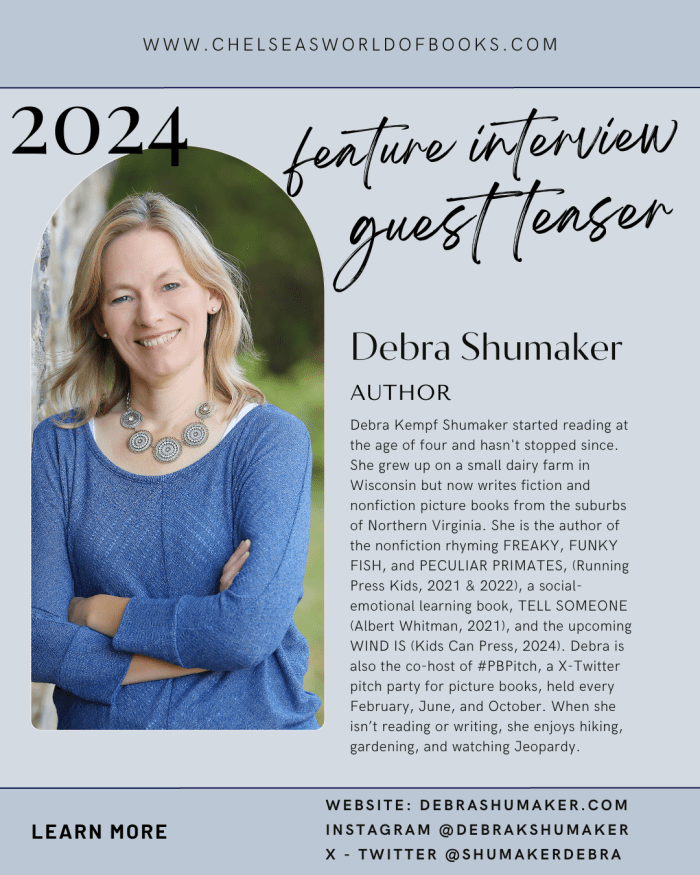
Below, you will find a list of their names, as well as a "guest teaser," with a photo, brief bio, and links to find out more.

Please note: if you do not see your name on this list, please, please do not assume that your application wasn't "special enough." Because it most definitely was. The choice was not a personal reflection of you or your story- simply a matter of only having so much availability. Additionally, I would LOVE to hear about your future publications! If you have a book coming out in 2024, please drop a comment below with the title/ISBN, as well as the pub date (or estimated pub date) and I would love to add it to my library order list and help share it with my writing/reading friends!
If your name and bio are up here- CONGRATULATIONS! I can't wait to talk with you more. Make sure to keep an eye on that inbox because you'll be receiving a personalized letter very soon. (Well, I hope it will be very soon.)  If your name and bio weren't on the list... but you did submit your application within the window, I'll be sending an email your way as well. 

Thank you ALL for participating in this year's application process. It was truly a treat to read all of your heartfelt applications.

Reminder: if you haven't already, make sure to SUBSCRIBE to the blog, so you don't miss out these wonderful monthly Feature Interviews. They are always filled with a ton of interesting and helpful writerly advice and information on all things publishing.

Psst! By the way... looking for great books? Visit MY SHOP PAGE on bookshop.org. There you can find my personalized book recommendations in my A MIX OF CHELSEA'S ALL TIME FAVORITES book list or browse books by my Feature Interview guests in my BOOKS BY FEATURE INTERVIEW GUESTS book list.