

In this article, we’ll be dissecting picture book pacing. We’ll explore when speed is important versus when it’s necessary to take your sweet time, and the reasons behind both.
If you’ve ever wondered how to perfectly pace a picture book, you’re not alone. In fact, even the most seasoned picture-book authors will tell you that pacing is something you have to constantly work at. It requires a delicate balance. And achieving the right pace takes patience and skill.
What speed is the right move?
The answer is: it depends on your story.
The key to perfect pacing is to keep your reader engaged without overwhelming them with too much at once. Imagine someone who is very good at…

Keeping you on the edge of your seat.
Why are they able to do that?
Because you’re interested in what they’re going to say next—and they know it.
How do they do it?!
By piquing your curiosity. Making you question motive. And often, by heightening the stakes.
COOL COOL COOL. Sounds great. But what does that mean for you? That means turning up the heat, raising the drama, and escalating tension within your scenes. If you do, you’ll be able to masterfully keep the interest of your reader and have them—

—hanging on your every word.
When is Speed Needed?
Speed is especially important at the beginning of the story. Why? Because if your reader is not immediately engaged with the WHY/PROBLEM, they will not have the interest and/or momentum to keep reading! So get to your problem quickly. Express clearly what is at stake for your character and why the reader should care.
When is Taking Your Sweet Time a Good Thing?
When is taking your sweet time a good thing?
Contrary to what you may think… the climactic moment of your story actually packs a bigger emotional punch if you let your reader stew. If you’ve ever slow-cooked anything, you can appreciate how much more flavorful the result is when you allow your ingredients to simmer. The same can be said of a book’s climax. Let your reader marinate in the moment.
For your picture book audience, which sits between the ages of 4-8, you also have to consider things like: “How many words do I have on this spread before the page turn?” A good rule of thumb to follow… when pacing a well-timed page turn, simplicity is often key for landing a joke and maintaining interest. Otherwise, you may lose your little reader.
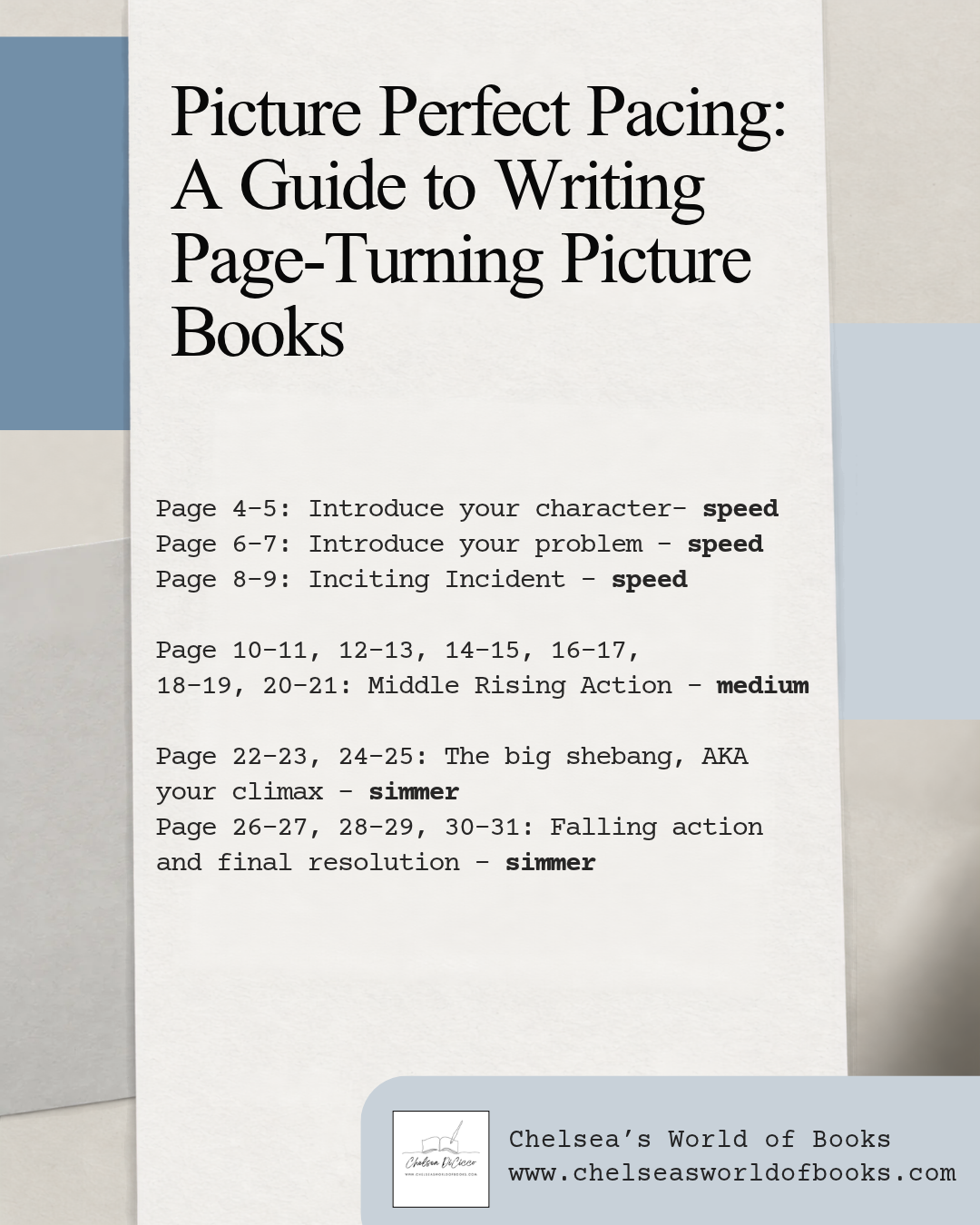
Now that you have the pacing tips, let’s see where they fall in your pages.
Page 4-5: Introduce your character – speed
Page 6-7: Introduce your problem – speed
Page 8-9: Inciting incident – speed
Page 10-11, 12-13, 14-15, 16-17, 18-19, 20-21: Middle Rising Action – medium
Pages 22-23, 24-25: The big shebang, AKA your climax – simmer
Pages 26-27, 28-29, 30-31: Falling action and final resolution – simmer
If you enjoyed this article, or have other suggestions for pacing picture books, please comment below!